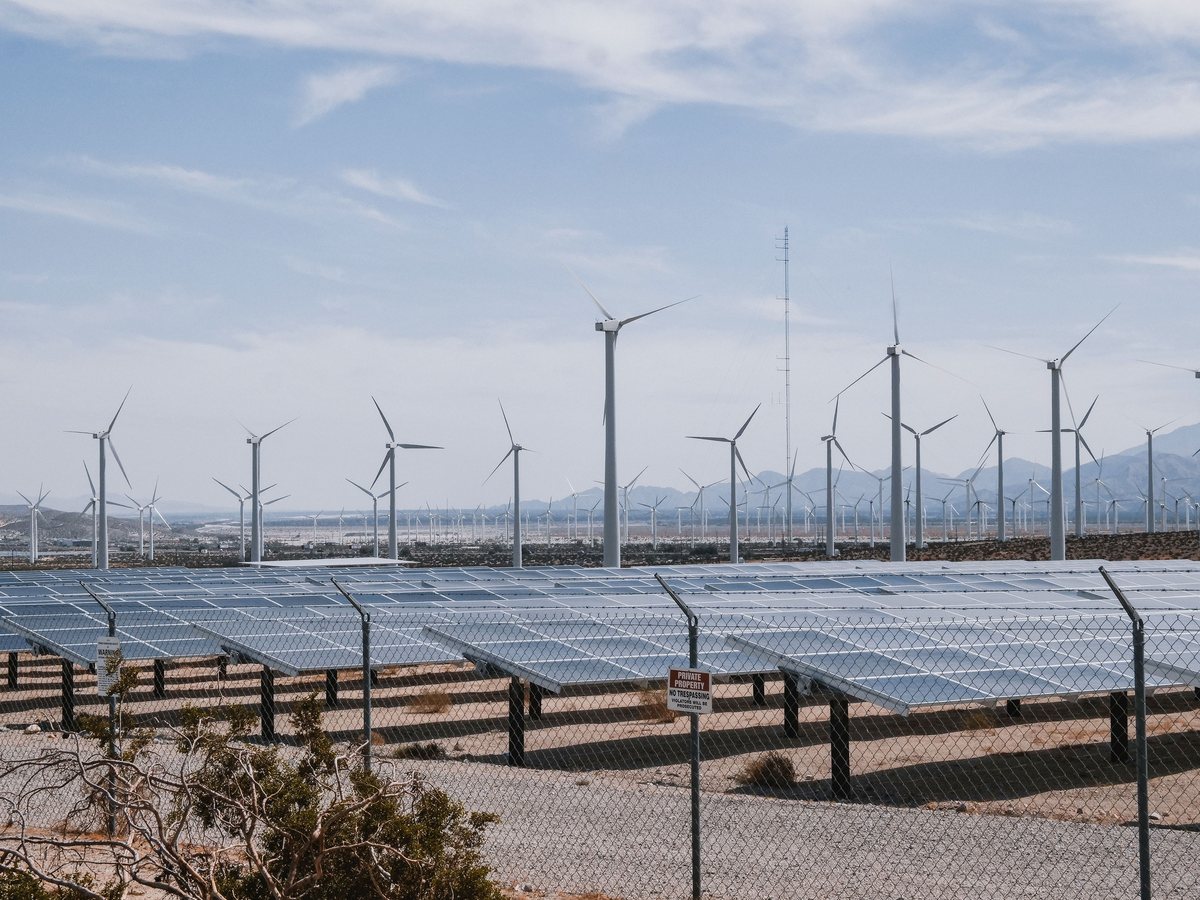
From a standalone step-up transformer to a solar configuration within our skid or containerised range, the electrical package is matched to the source and the grid connection.
Tell us the product, approximate rating and your e-mail. We will review the requirement and identify any missing information. For voltages, delivery country and project details, use the full configurator.
| Input to define | Why it matters |
|---|---|
| Inverter make, model and AC range | Sets the transformer low-voltage winding and operating window. |
| Plant power and block architecture | Defines one- or multi-inverter blocks, transformer rating and redundancy. |
| Collector-system voltage and grid rules | Defines the step-up ratio, insulation level, protection and MV interface. |
| Harmonics, ambient and loading profile | Drives losses, temperature rise, cooling and lifetime assumptions. |
Photograph shows an installed solar configuration within the skid range. Final equipment arrangement and supply boundary are project-specific.
Energy flows from LV to MV, continuously, whenever the sun shines or the wind blows. The design has to be genuinely bidirectional, not a distribution unit used backwards.
String and central inverters output anywhere from 400 to 800 V. The LV winding is matched to the actual inverter, not to a catalogue default.
Pairing one transformer with two inverter blocks is common and economical, it has to be designed in from the start.
Beyond a certain plant size, the connection point becomes an MV or HV substation, which we build as a complete package.
| Parameter | Our approach |
|---|---|
| Power flow | Bidirectional by design, declared at specification |
| LV voltage | 400 – 800 V, matched to your inverter |
| Windings | Single or double secondary, per inverter architecture |
| K-factor | Adapted to the inverter harmonic spectrum |
| Scope | Step-up transformer alone, or full evacuation substation |
| Delivered lead time | 15 to 18 weeks, production + shipping |
Indicative approach, the final specification follows your requirement, confirmed at quotation.
Oil-immersed →Skid & containerised →MV substation →
Physically it will transform, but the design assumptions differ: continuous reverse flow, inverter harmonics and the duty cycle of a plant are not what a distribution unit is dimensioned for. Specify it as a step-up from the outset.
Whatever your inverter actually outputs, 400, 690 or 800 V are all common. Send the inverter datasheet with your request and we match it.
Yes, from the step-up transformer alone to a complete MV substation, or an HV substation on a study basis for larger plants.
Renewables are already massively connected in France: over 1.4 million producers are on the grid, about 90% on the distribution network, and the sector is targeting on the order of 5–6 GW of new capacity connected per year. Every solar, wind or storage project needs an evacuation transformer designed for injection.
Send the inverter reference and plant layout, first reply within 48 h.
Configure a quote →