Configurations we can study for the United States
| Configuration | Typical use | Defined with the quotation |
|---|
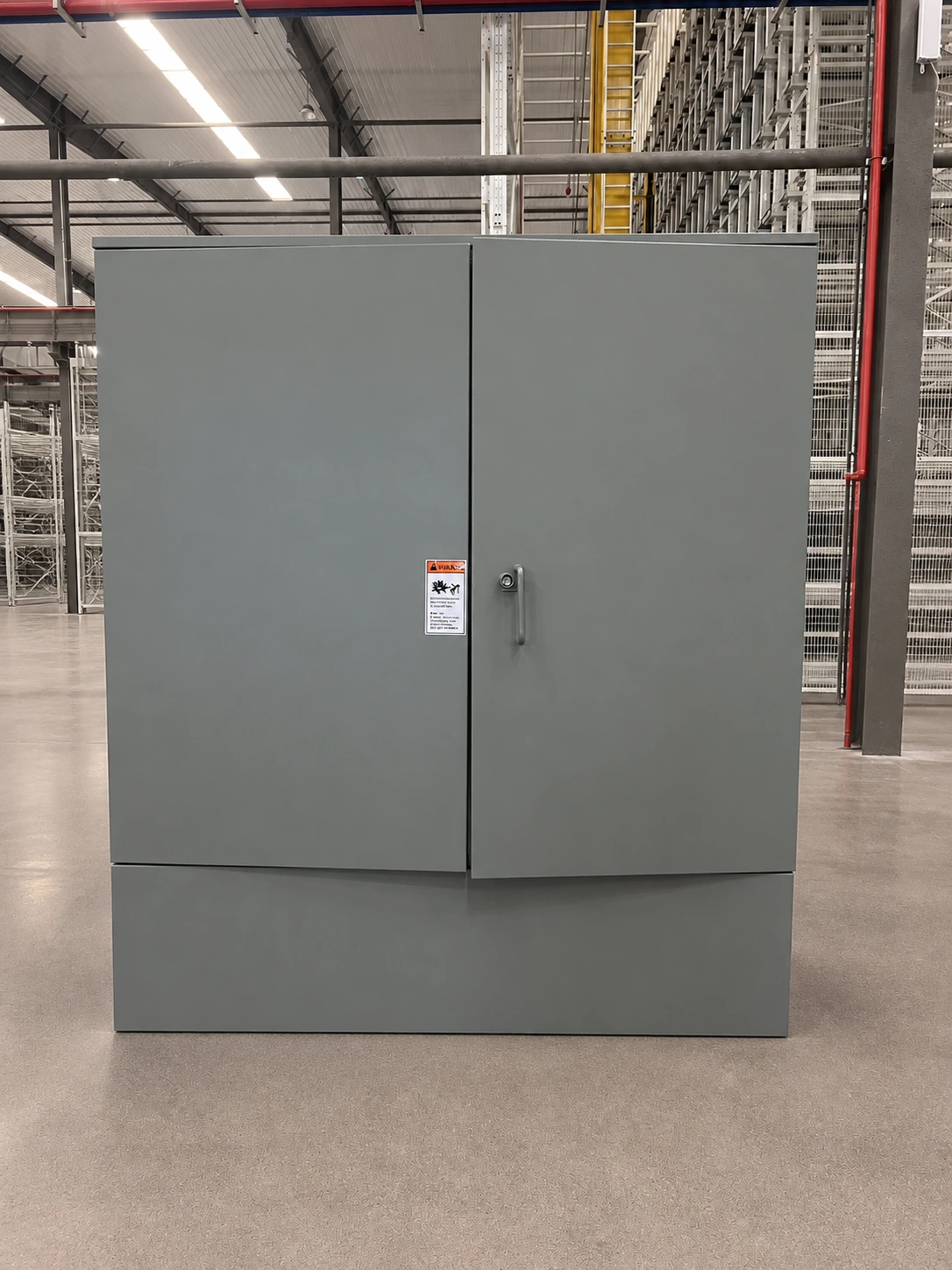
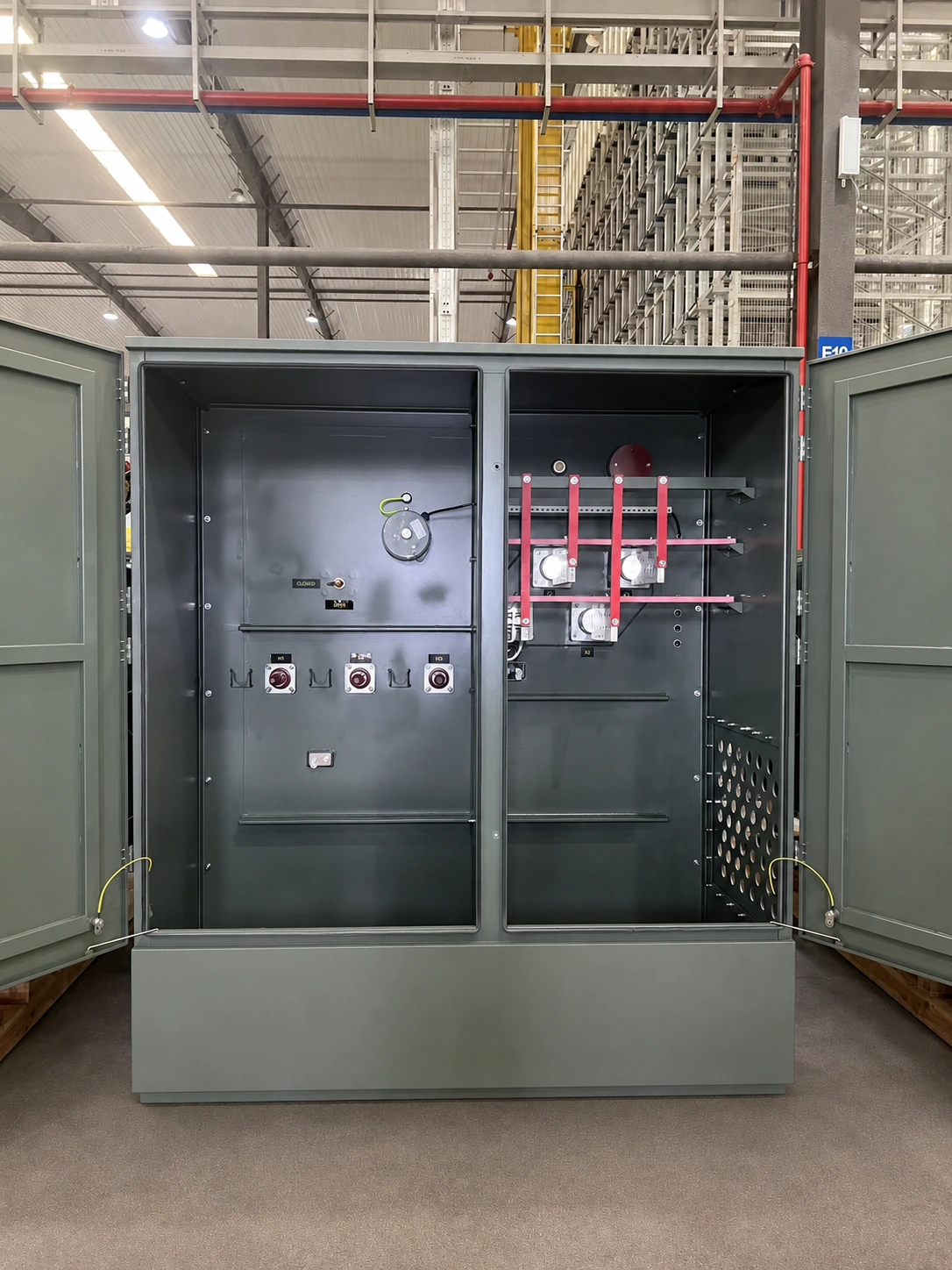
| Pad-mounted distribution transformer | Commercial, industrial, utility and private distribution | Primary and secondary voltages, phase, taps, compartment layout, protection and metering provisions |
|---|
| Compartmentalized unit with external radiators | Higher-duty distribution or project-specific thermal requirements | Rating, cooling, fluid, temperature rise, sound level, footprint and accessories |
|---|
| Step-up transformer | Solar, storage and other generation projects | Inverter-side voltage, collector voltage, harmonics, loading profile and grid-interface requirements |
|---|
What must be defined before a firm quote
Electrical duty
Rated power, 60 Hz frequency, primary and secondary voltages, single- or three-phase arrangement, impedance, taps, vector or winding connection, available fault current and the real operating profile.
Installation and enclosure
Pad layout, cable entry, live-front or dead-front arrangement where applicable, corrosion environment, ambient temperature, altitude, sound constraints, lifting and transport limits.
Standards, utility drawings and efficiency basis
If the project calls for particular ANSI/IEEE design rules, US Department of Energy efficiency requirements, local utility construction standards or third-party certification, send the exact reference and edition. The quotation will state what is included, what requires validation and which documents are supplied.
Frequently asked
Do you claim every US certification on this page?
No. Requirements vary by transformer type, utility, state and project. We confirm the applicable standard, certification and documentation scope in writing before the order.
What should I send for a first review?
A one-line diagram or existing nameplate, kVA, voltages, phase, 60 Hz confirmation, installation location, quantity, required delivery date and any utility specification.
Can you study solar and storage step-up duty?
Yes. Include the inverter or PCS reference, operating voltage range, harmonic data, loading profile and collector-system voltage so the transformer is engineered around the actual source.