In the workshop
Our dry-type transformers in production
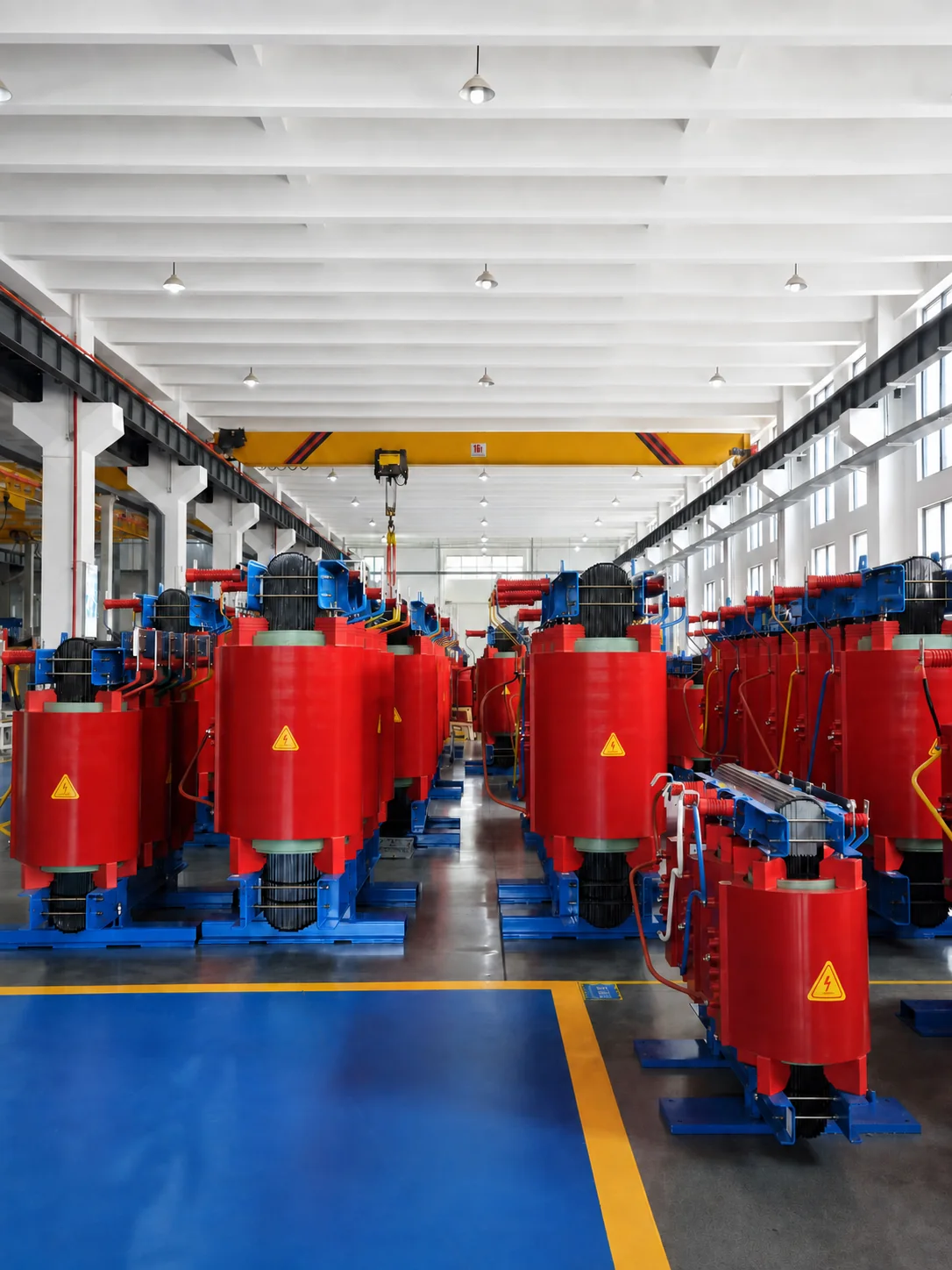
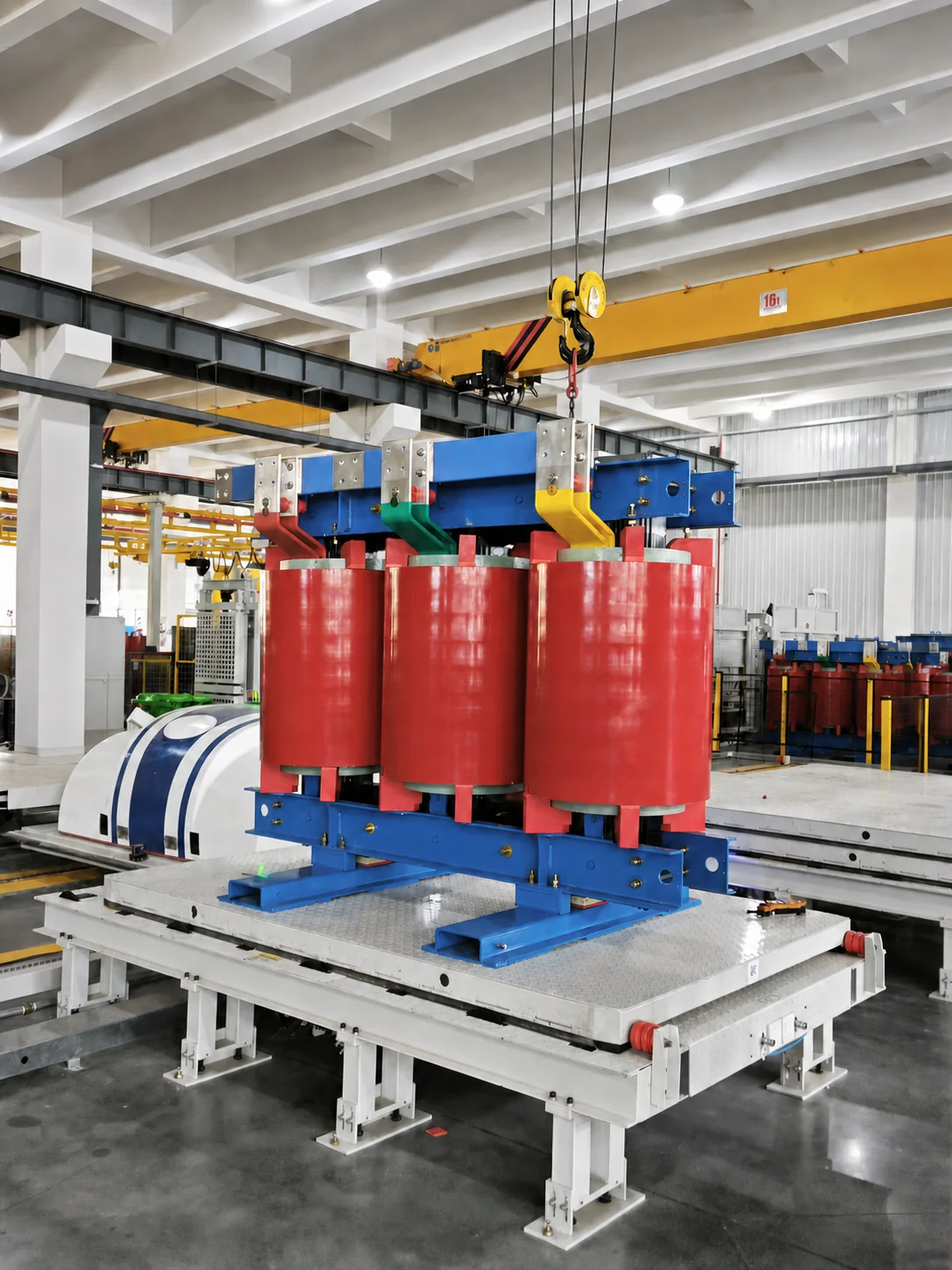
Every unit goes through the full routine test sequence before packing. See the test laboratory and what we check →
No liquid, no leak or fire-fluid risk: the reference for indoor and sensitive sites, data centers, public buildings, hospitals.
Tell us the product, approximate rating and your e-mail. We will review the requirement and identify any missing information. For voltages, delivery country and project details, use the full configurator.
Every unit goes through the full routine test sequence before packing. See the test laboratory and what we check →
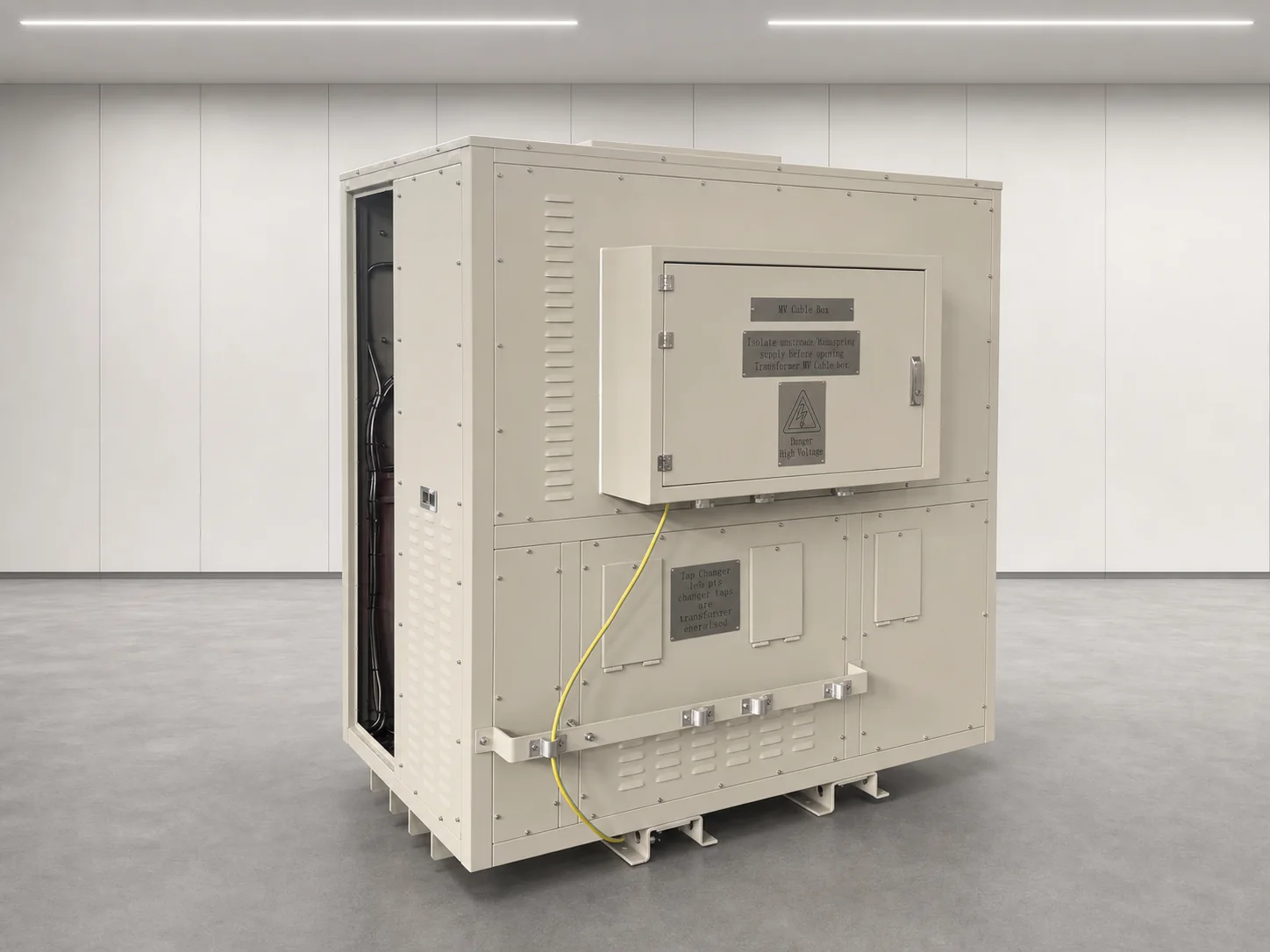
The same unit can be supplied inside a metal enclosure: IP rating matched to the room, lockable MV cable box, shrouded LV busbar, thermal monitoring box and optional forced ventilation. This is the configuration chosen when the transformer shares a technical room with staff or other equipment.
The windings are encapsulated in epoxy resin instead of being immersed in a liquid, and cooling is by air. The result: no flammable fluid, no risk of leak or pollution, reduced maintenance. It is the reference for indoor and sensitive locations, data centers, buildings open to the public (ERP), hospitals, basements, wherever fire safety takes priority.
| Power | Impedance | Behaviour classes | Indicative mass |
|---|---|---|---|
| 250 kVA | 6 % | F1 · E2 · C2 | ≈ 1.1 – 1.4 t |
| 630 kVA | 6 % | F1 · E2 · C2 | ≈ 1.9 – 2.3 t |
| 1,000 kVA | 6 % | F1 · E2 · C2 | ≈ 2.6 – 3.1 t |
| 1,600 kVA | 6 % | F1 · E2 · C2 | ≈ 3.6 – 4.2 t |
| 2,500 kVA | 6 % | F1 · E2 · C2 | ≈ 5.2 – 6.0 t |
Basis: cast resin class F (155 °C), AN (forced-air optional), Dyn11, 50 Hz. Classes F1 · E2 · C2 per IEC/EN 60076-11. Indicative pre-sizing values, confirmed at quotation.
F1, flame-retardant, self-extinguishing (the class required in most ERP and public buildings). E2, withstands severe condensation and pollution. C2, operable down to −25 °C. This F1·E2·C2 combination is the usual specification for demanding indoor environments.
At equal rating, generally yes, the tank and oil of an immersed unit damp vibration. A well-designed, well-installed dry-type is nevertheless fully compatible with a tertiary environment; a noise level can be specified.
Yes, no fluid to sample or top up. Periodic inspection and keeping the cooling paths clear are the essentials. This is part of why it is favoured for hard-to-access indoor installations.
F1 is the flame-retardant class expected in public buildings and sensitive sites; the full F1·E2·C2 set covers condensation, pollution and cold. We confirm the class against your project.
Examples of enquiry bases for European projects. Ratings, voltage ratio and options are confirmed for your network; these are not stock references or guaranteed datasheets.
| Rating | Example duty | Specify in the enquiry |
|---|---|---|
| 630 kVA | 20 kV / 400–410 V · 50 Hz | Dyn11; AN / AF, enclosure |
| 1,000 kVA | 20 kV / 400–410 V · 50 Hz | Impedance, ventilation, noise |
| 1,600 kVA | 20 kV / 400–410 V · 50 Hz | Dimensions, ventilation, cable interfaces |
Quantity, kVA, primary and secondary voltages, frequency, impedance, connection group, delivery country and postcode, required date, and any existing nameplate or one-line diagram.
State copper or aluminium windings, loss and sound limits, protection and monitoring, cable entry and space constraints. The final selection depends on the installation and approved design.
The quotation identifies equipment, accessories, documents, delivery point and Incoterm. Unloading, lifting, installation, site cables, terminations and commissioning must be separately agreed.
15–18 weeks is an indicative target for selected distribution configurations after technical approval and the agreed payment. Availability, shipping and destination determine the written schedule. UK projects: send the DNO specification and 50 Hz network data. US projects: use the separate 60 Hz project page.
Tell us your indoor constraints, fire class, environment, footprint. First reply within 48 h.
Configure a quote →